


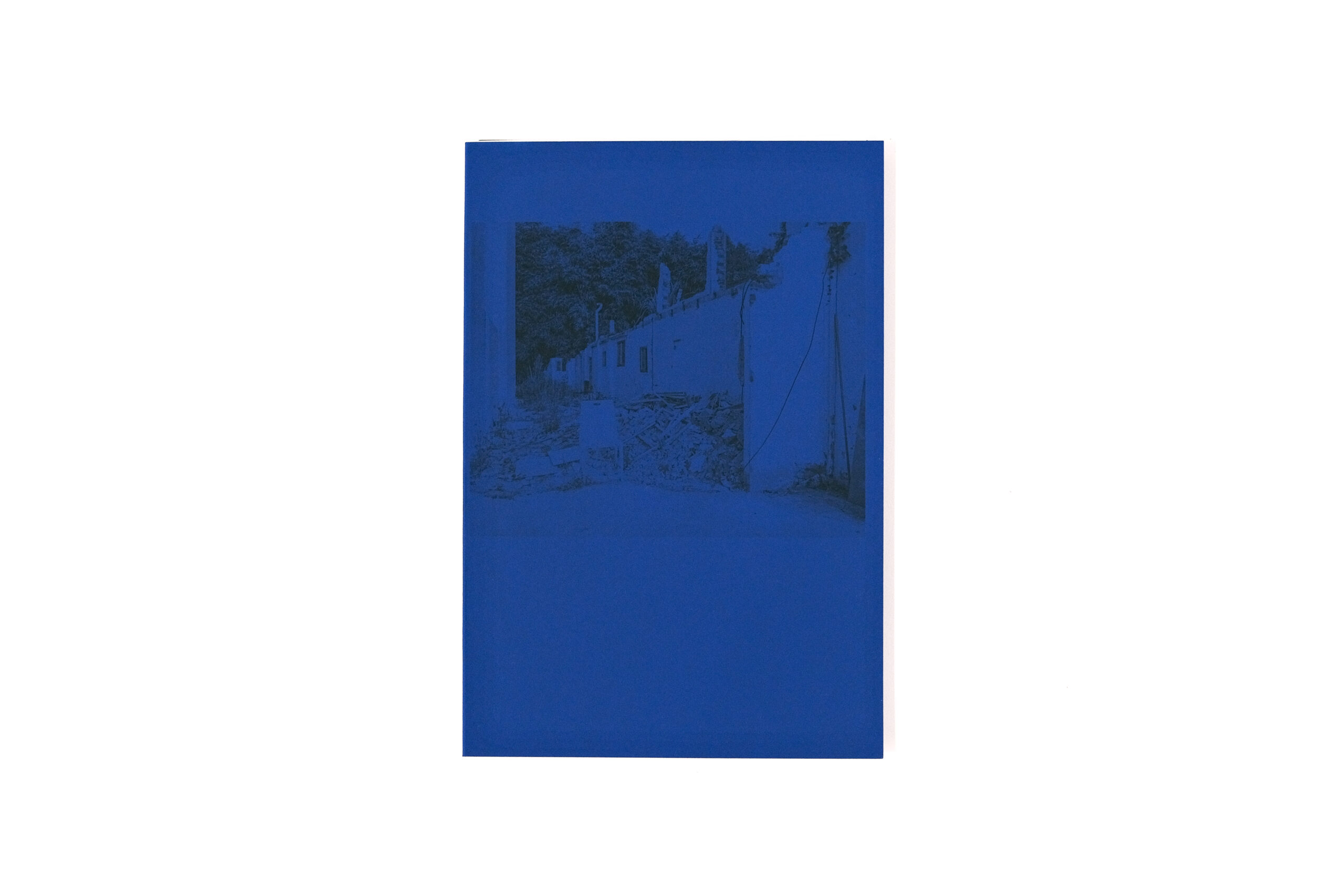
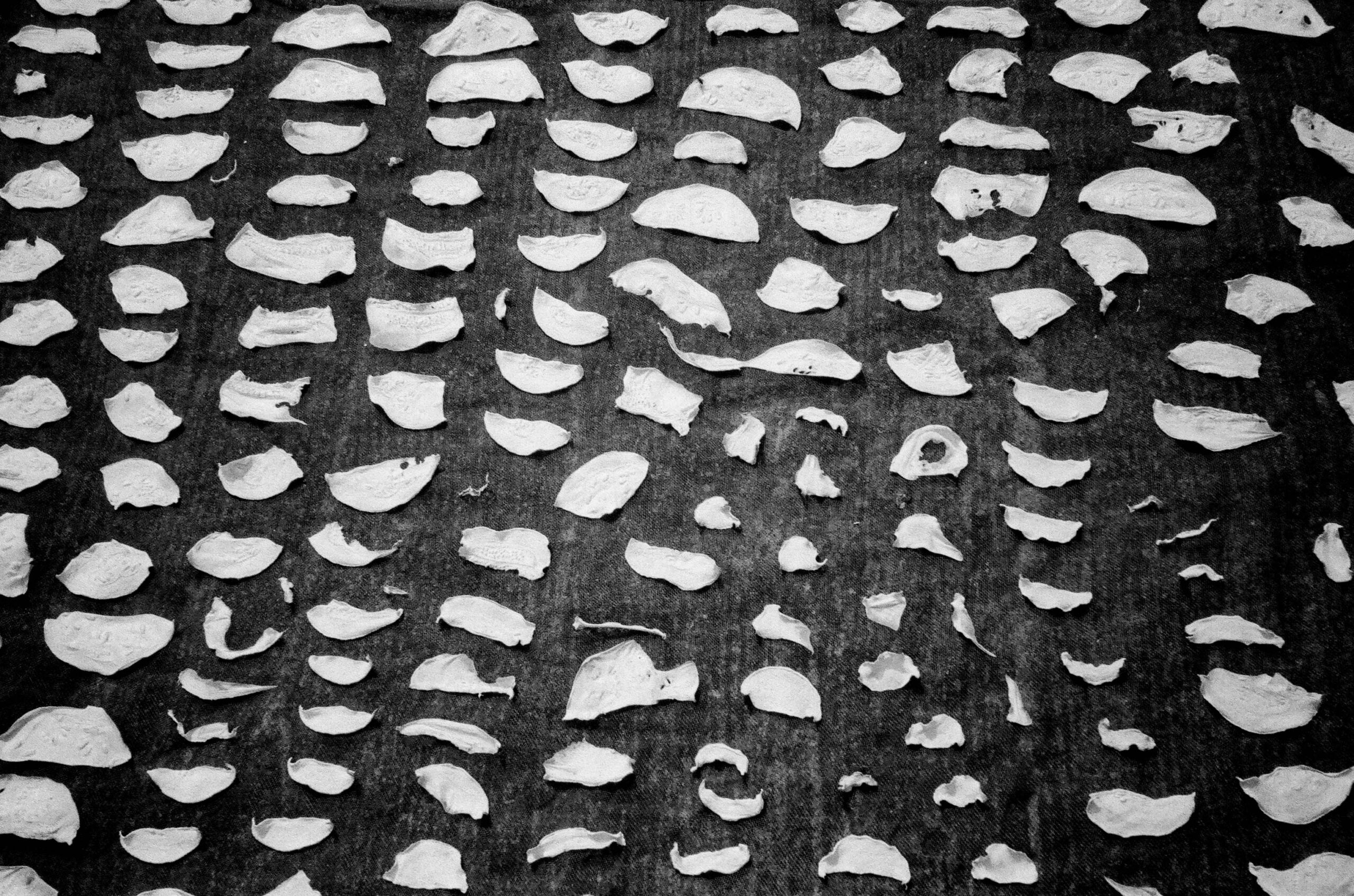
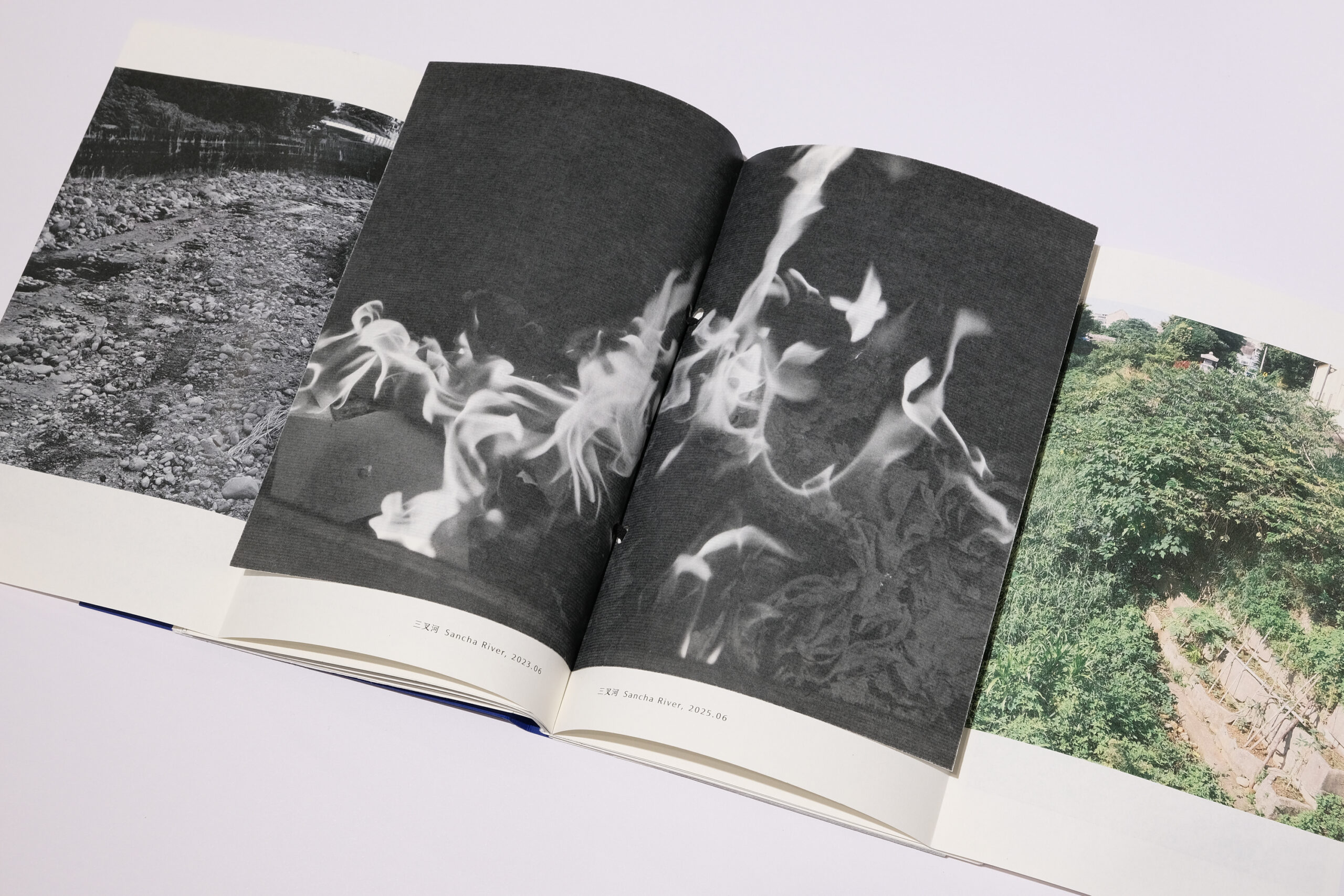
I believe hometown is a collapse — a place that sends you into endless departure and eternal return.
The death of a family member awakened emotions I had long forgotten, yet that remained deeply important. When a place becomes empty, a hometown loses certain gazes—those of the deceased, and my own.
In their absence, what remains is a fullness of solitude and silent murmurs. In Chinese mourning rituals, the body of the deceased remains with the family for seven days before cremation. During that week, memories I had forgotten for nearly twenty years gradually resurfaced.
In the two years that followed, I carried a camera while moving between leaving and returning to my hometown. Drifting along winding routes through mountains and valleys, I followed wordless traces inscribed within my body, gathering fragments of myself that seemed to remain there.
For me, creating this book conceived as an installation—became a way of looking at a collapsing hometown through the dreaming eyes of the past, where displaced nostalgia and eroding longing drift between distance and intimacy. It also forms an empty field in which my yearning for lost childhood reveries can continue to circulate.
I seem to hear a warm voice from my hometown, “Welcome home.” Some things return only after I have drifted very far away.
Related
Singaporean Love
Singaporean Love explores Jay Lim’s identity as a gay Singaporean man, tracing his experiences of love, intimacy, and belonging through…

Fruiting Bodies
Ying Ang’s Fruiting Bodies reimagines the mushroom as both a biological form and a feminist metaphor – an emergent, generative…