


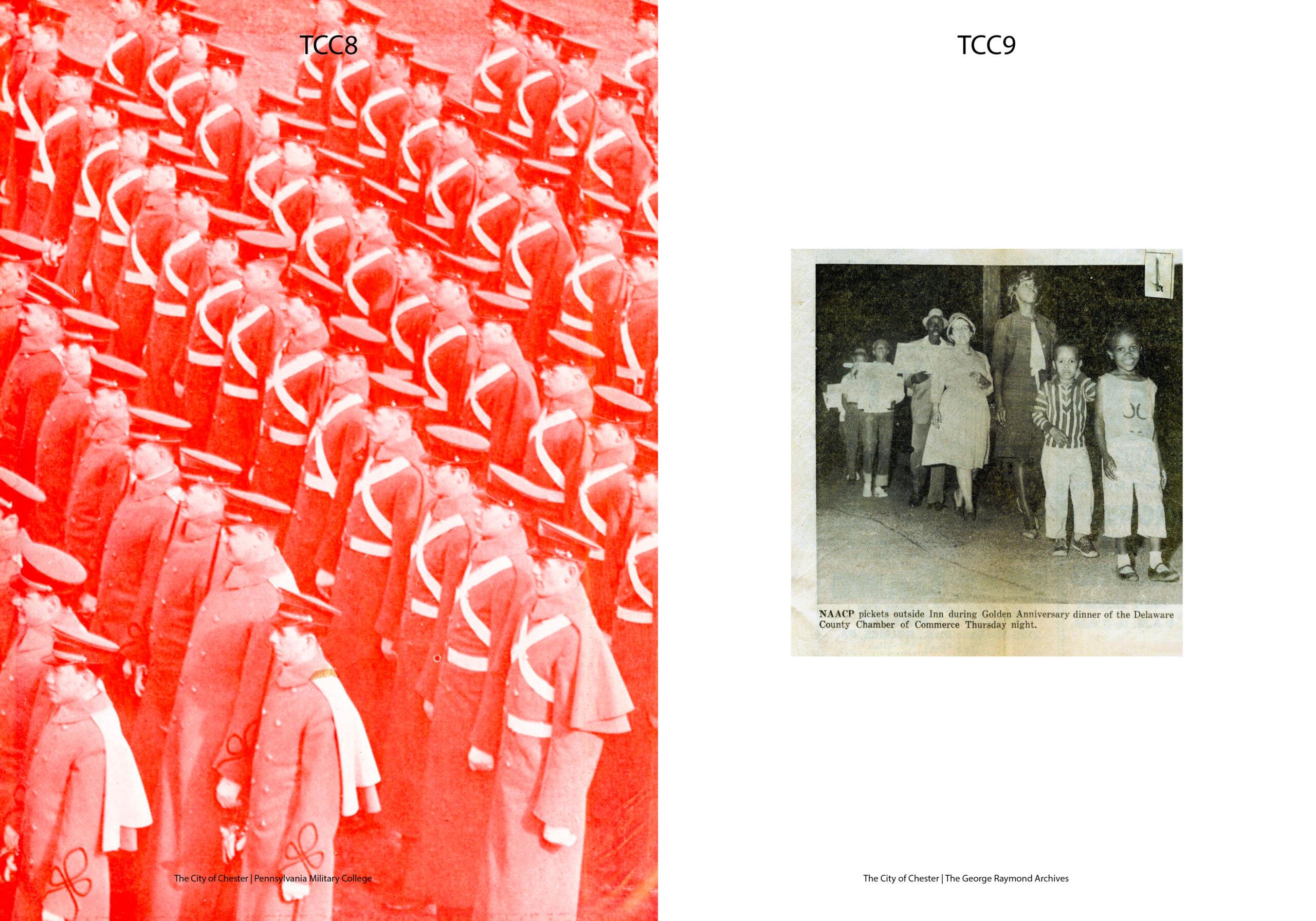
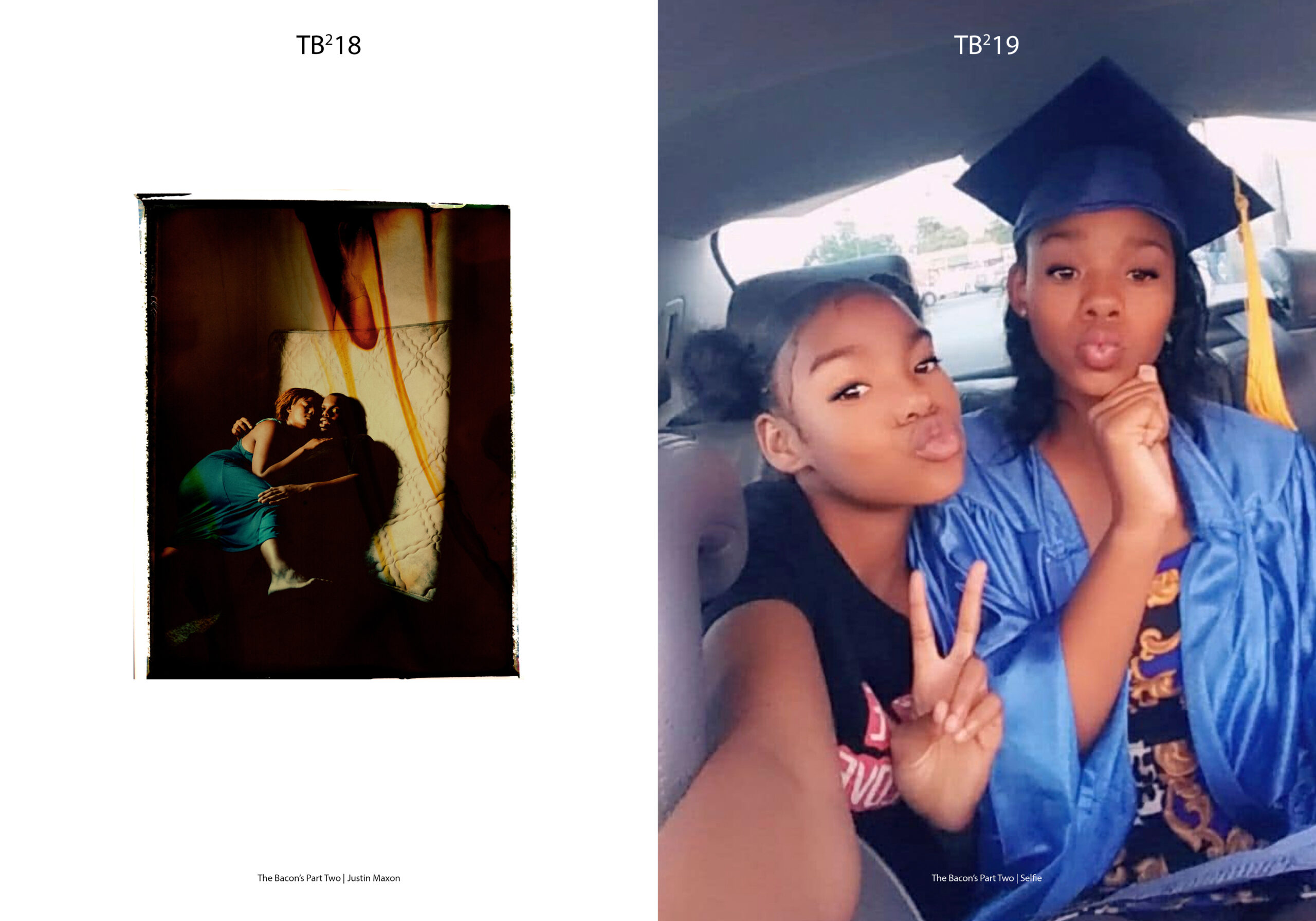
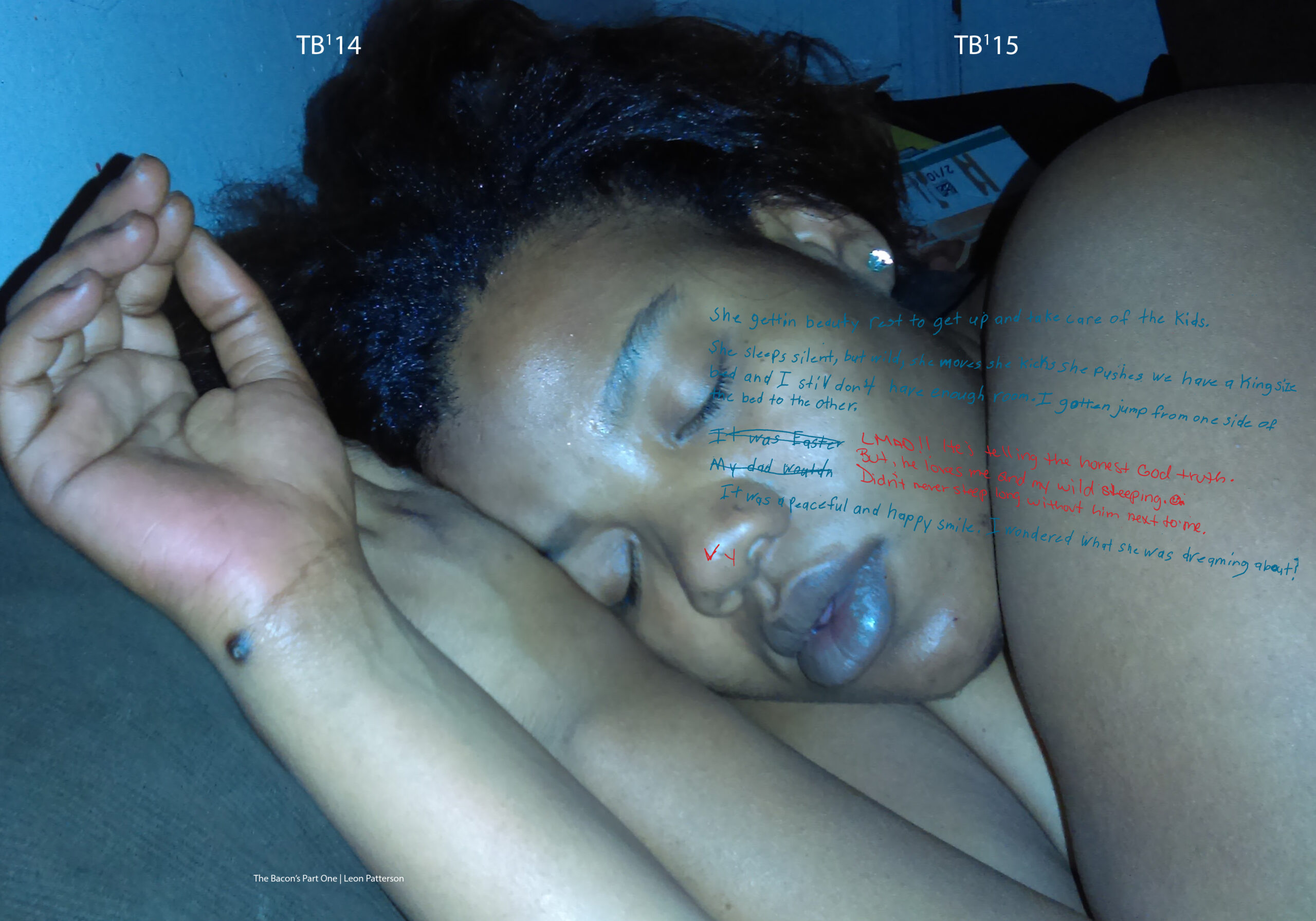
Chester: Staring Down the White Gaze is a collaborative project that examines how whiteness operates within American visual culture. Through an interrogation of image-making, authorship, and the politics of the gaze, the project investigates how visual practices have historically constructed and sustained racial hierarchies.
Developed in collaboration between scholar Dr. H. “Herukhuti” Sharif Williams and photographer Justin Maxon, Chester stages a reflexive dialogue that exposes how white supremacy is reproduced and naturalized through photographic representation. By inverting the gaze—turning it back toward whiteness itself—the work enacts a form of self-scrutiny that renders visible the cultural and aesthetic mechanisms of racial hegemony.
The publication brings together contributions from artists rooted in Chester, Pennsylvania—Desire Grover, Wydeen Ringgold, Leon Paterson, and Jonathan King—whose practices reframe dominant visual narratives of the city. Their work is juxtaposed with Maxon’s photographic archive (2008–2016) and historical media portrayals, forming a counter-archive that destabilizes the visual grammar of whiteness. At the project’s core is a visual glossary of white racial tropes, constructed from Maxon’s family archive and popular culture. This lexicon functions as a pedagogical and performative tool, tracing how whiteness is fabricated, circulated, and mythologized. Handwritten commentary expands this dialogue, foregrounding the co-authored nature of the work and inviting critical reflection.
Chester advances the proposition that photographic and aesthetic decisions—of light, framing, sequencing, and perspective—do not merely depict reality but actively construct it. Within this framework, the camera becomes an instrument of power that codifies racial difference and legitimizes the epistemic authority of whiteness. The project aligns itself with decolonial visual discourse, interrogating how both maker and viewer are implicated in systems of anti-Blackness.
The publication resists linear reading through interlocking, zine-like sections connected by thematic codes and visual rhymes. Foldouts and tangents punctuate the reading experience, creating moments of rupture and pause. This non-linear structure mirrors the self-determined and disorienting process required to examine one’s relationship to whiteness, transforming the act of reading into a form of aesthetic accountability.
Related
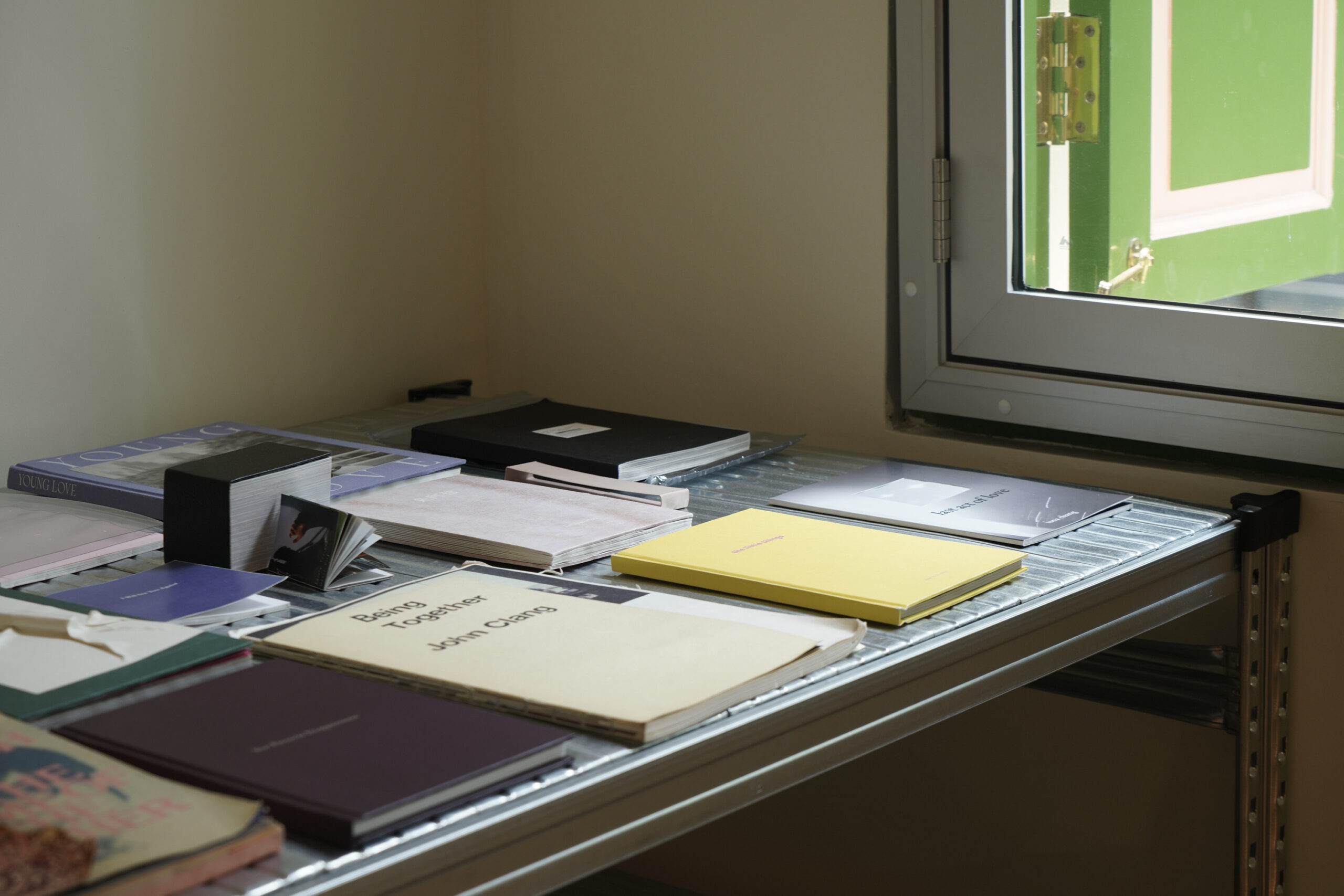
Dialogue: photo + book + sg = ?
Join curators Marvin Tang and Liana Yang for a relaxed afternoon conversation about the role of photobooks in Singapore. Moderated…
About Asia Meet 2026: 10th Edition
Asia Meet seeks to facilitate global connection by bridging the gap between photographic practitioners and industry experts across borders. In…
Singaporean Love
Singaporean Love explores Jay Lim’s identity as a gay Singaporean man, tracing his experiences of love, intimacy, and belonging through…