


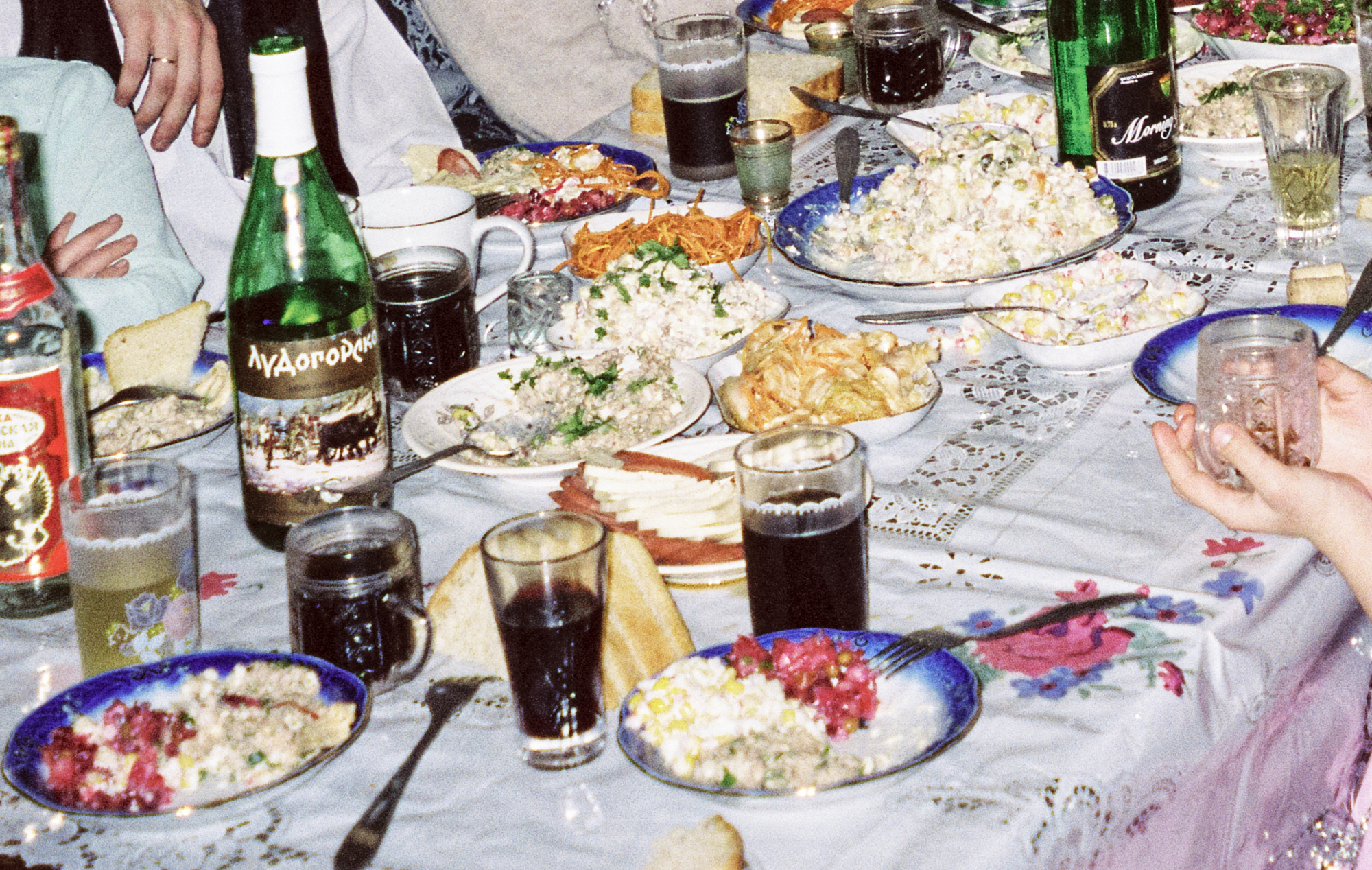
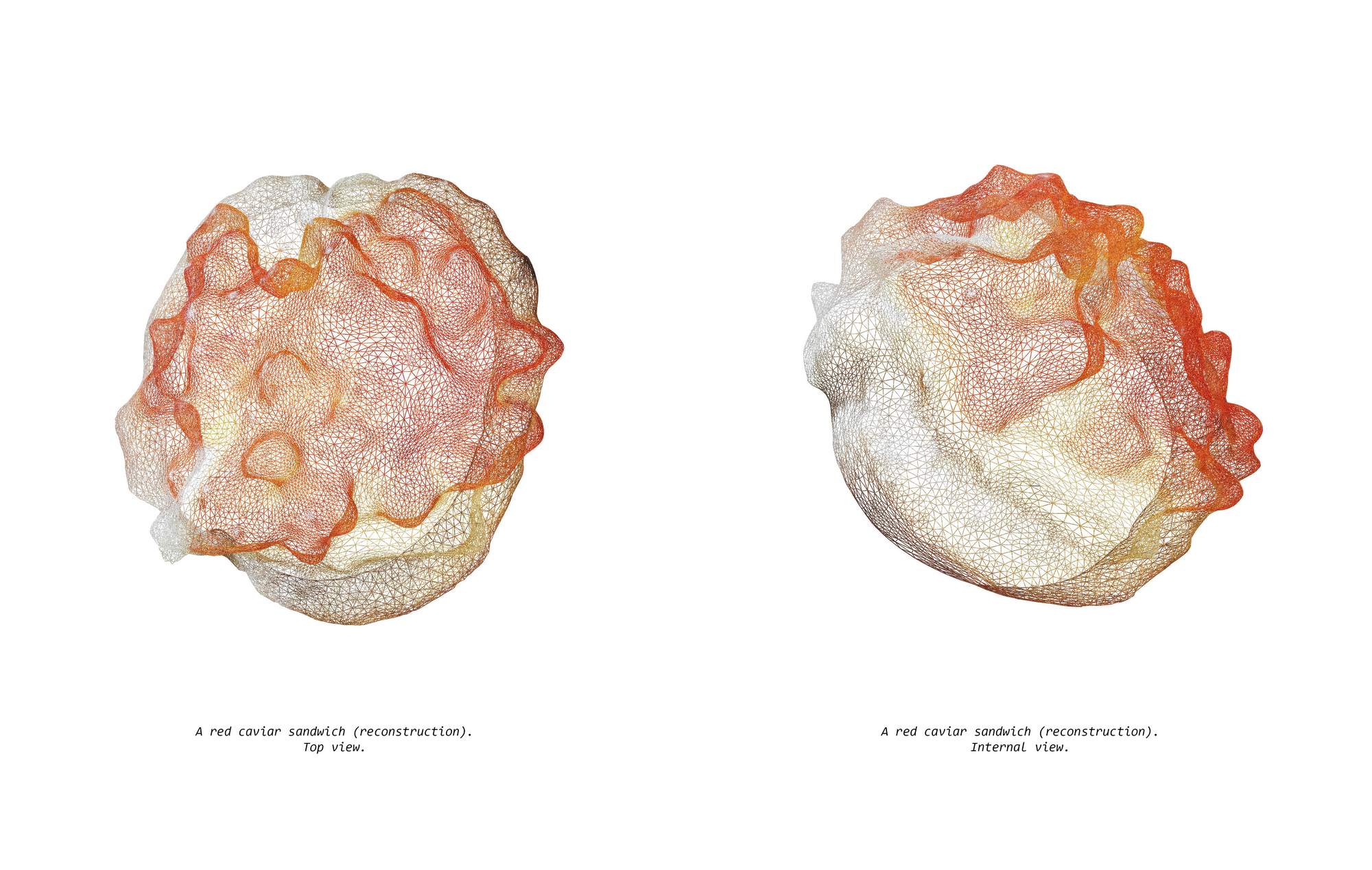
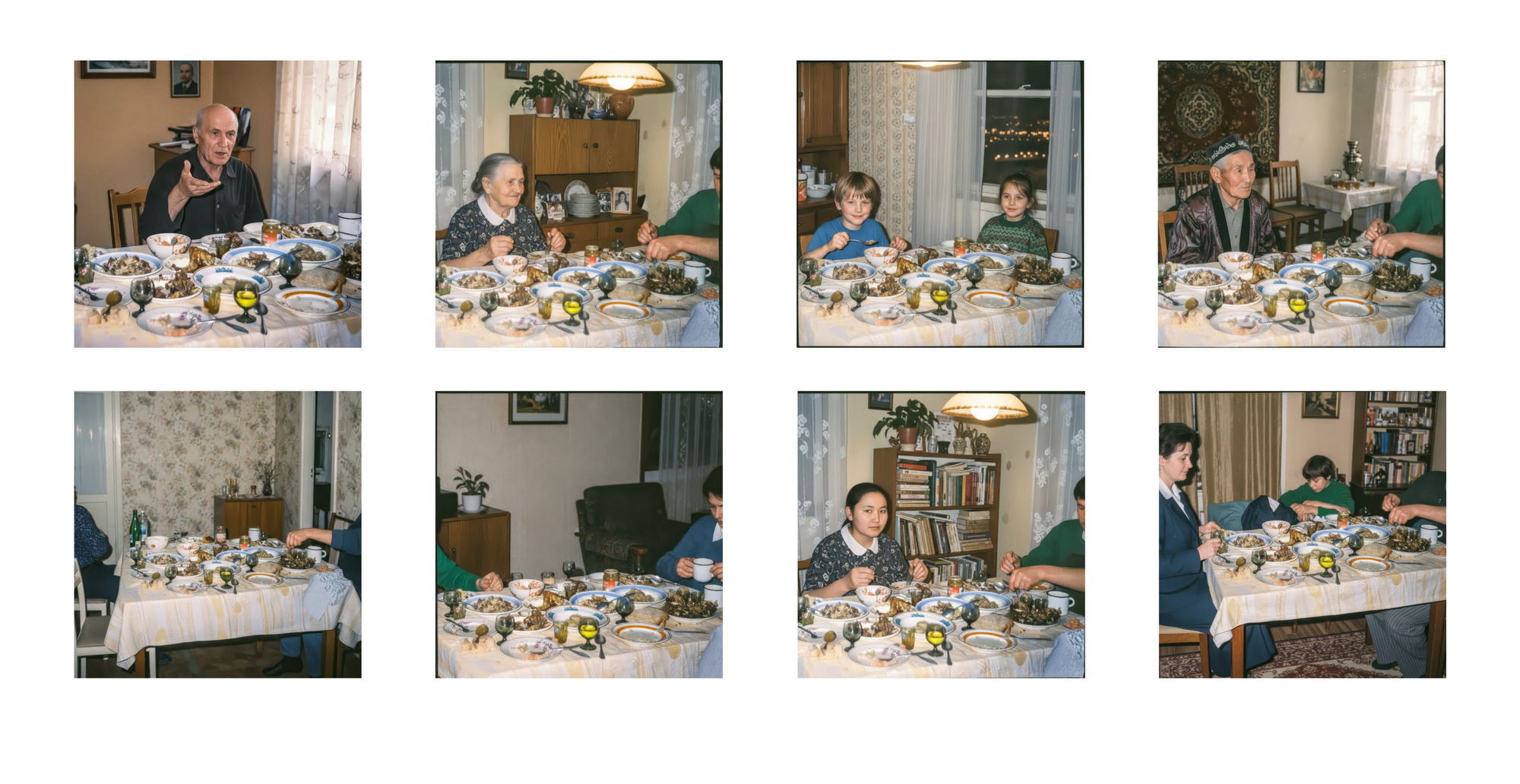
This project explores the distortions of memory through photographs of domestic celebrations in the USSR. The book is based on photographs selected from a photographic archive dating from the 1960s to the 2000s. To illustrate the mechanisms of Soviet propaganda, the book includes pages from original edition of ‘The Book of Tasty and Healthy Food’ (pub. 1963), which promoted an image of abundance dramatically detached from real life in the Soviet Union. As a counterpoint to this fiction, some real Soviet dishes were reconstructed using photogrammetry.
Memory is also affected by the reconstructive nature of human memory. Scientists have identified the phenomenon of memory reconsolidation, in which the brain rewrites memories of an event or a person each time they are recalled. Emotions and thoughts can influence this process; as a result, memories may have little in common with reality.
Starting around 2020, distortions and noise come not only from our unreliable memory, but also from AI. All archival photographs in the book are authentic, but some of them were extended (outpainted) using AI, blurring the boundary between document and fiction.
As a result, memory can no longer be considered reliable, as it is significantly distorted by memory reconsolidation, contaminated by propaganda, and filled with false artifacts created by artificial intelligence.
Related
Dialogue: photo + book + sg = ?
Join curators Marvin Tang and Liana Yang for a relaxed afternoon conversation about the role of photobooks in Singapore. Moderated…
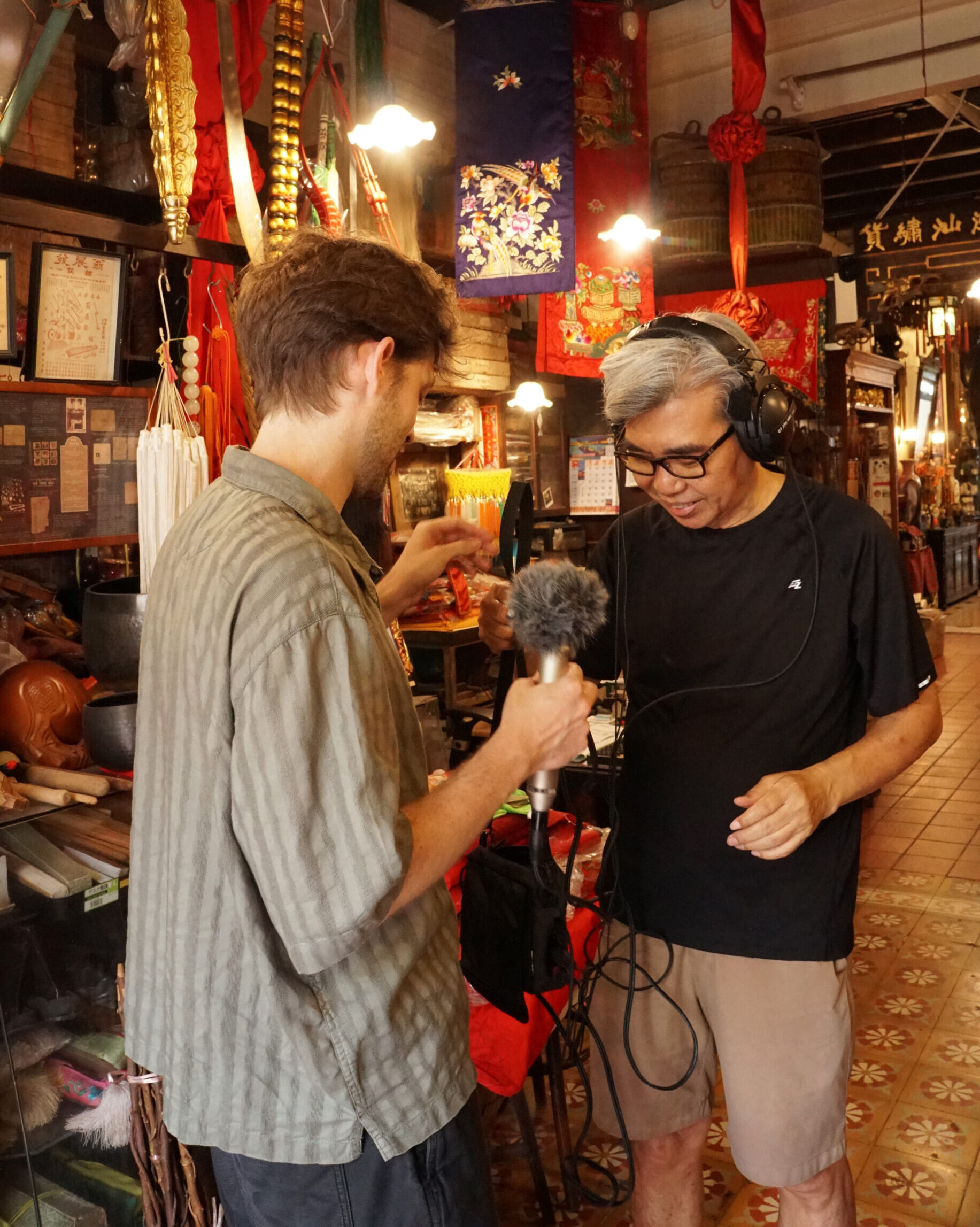
Passing By Paradise: Photo-Audio Walk
Photo-Audio walk along site-specific installations hidden away in Geylang with Dorothy Wong Ka Chung & Benjamin Ryser. Is home to…
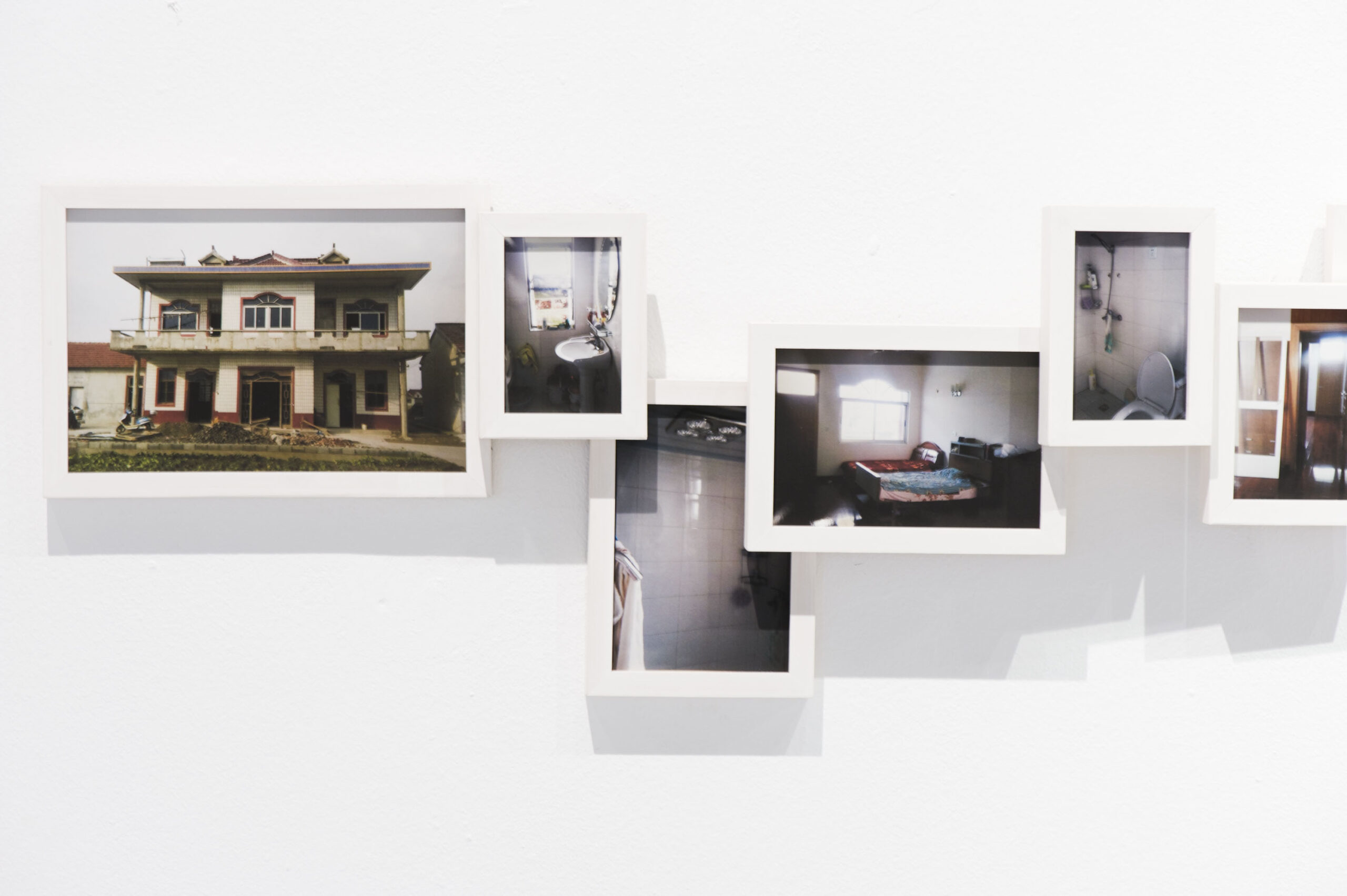
The Stories We Carry: What We Carry Forward
Part of Shifting Images: Photography From Singapore 2000 – 2025 What do we carry with us from one life, generation…