


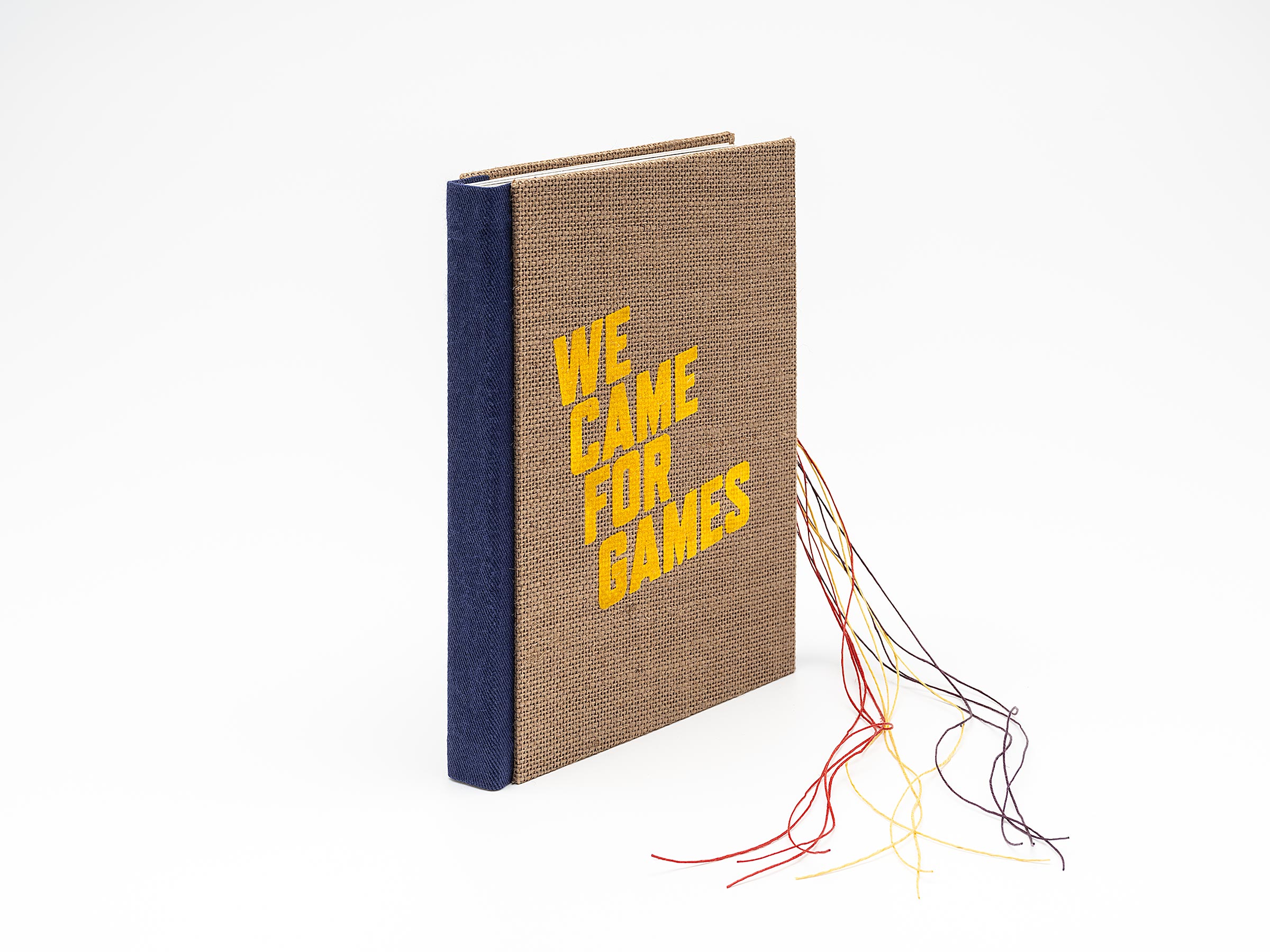
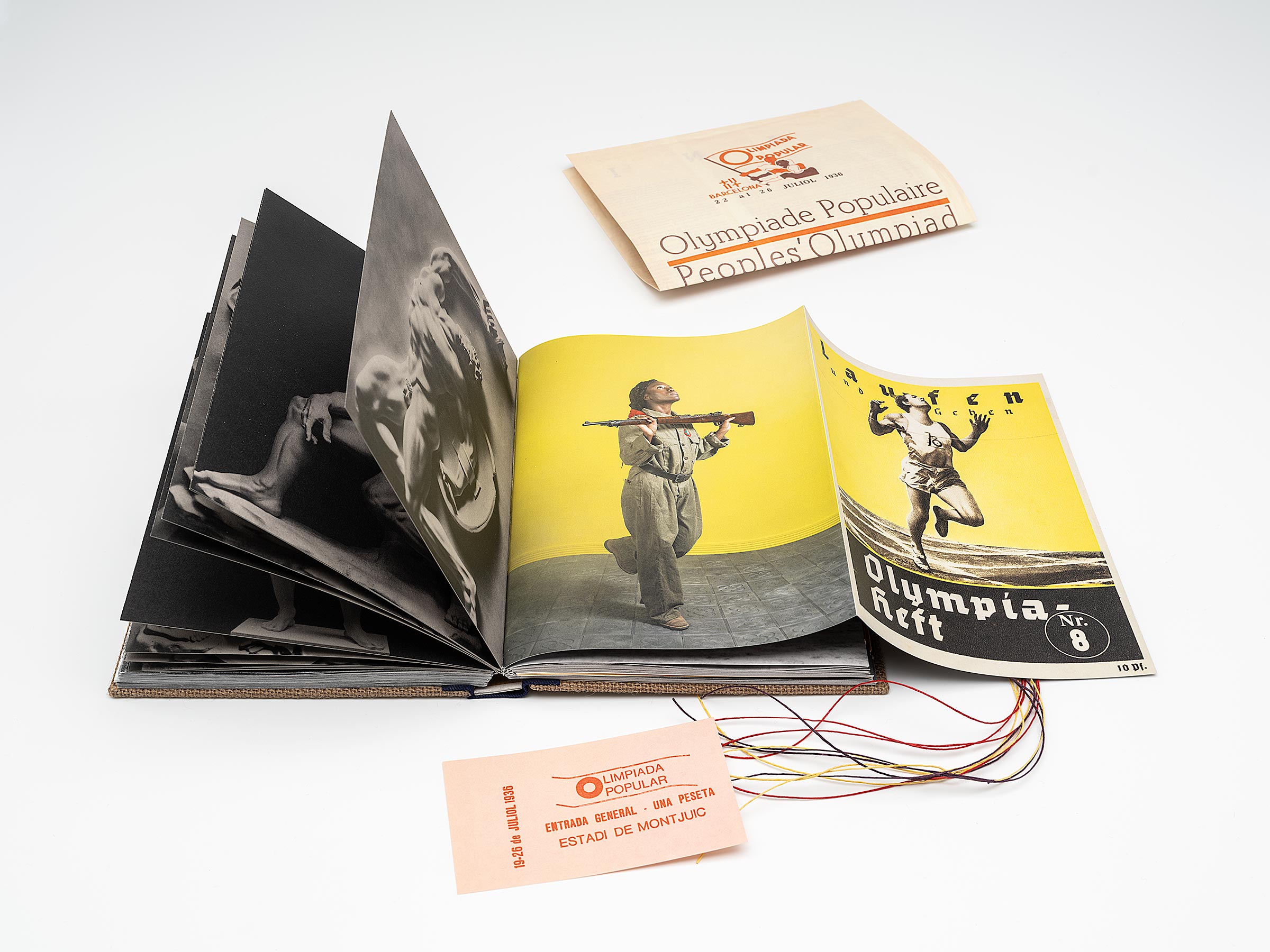
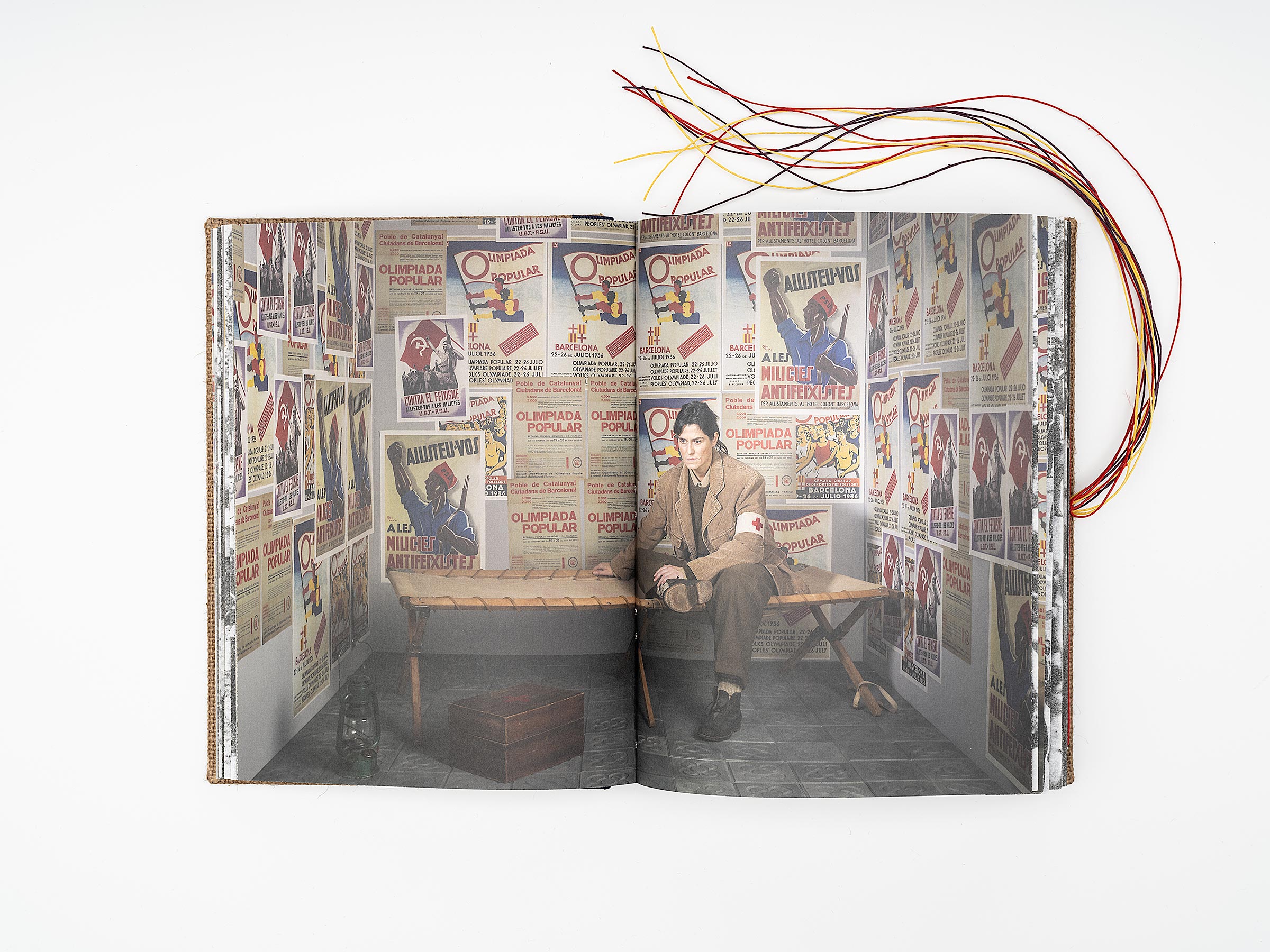
We Came for Games is a humanist project that advocates equality, respect and solidarity between people and cultures. This artist’s book is set in Barcelona in mid-July 1936, when everything was ready for the start of the People’s Olympiad. It was intended to be the biggest international anti-fascist resistance event ever held. The same year, the official Olympic Games were to be held in Berlin with Hitler in power, a shameful act of Nazi whitewashing. But the Catalan capital had been planning the extraordinary boycott of the German Olympics for some time. It was to be a great celebration of peace and harmony between peoples, combining sport and regional folklore in an absolutely unique open call. Unfortunately, however, the protest games were never held. Civil war broke out in Spain the very day before the opening ceremony, due to a fascist coup d’état. Hundreds of young sportsmen and women, having just arrived in the city, decided to take up arms to defend the Republic from the rebels instead of returning to their countries. They came for games and stayed to fight. This concentration of foreigners was the seed for the International Brigades.
Inside the book, the story is structured in three chapters. The book begins with a selection of personal stories of athletes who came to the city of Barcelona to take part in these alternative games but who, after the beginning of the war in Spain, decided to stay in the country and take up arms to fight. In addition, several photographs are shown, comparing the official 1936 Olympics in Berlin with the streets of Barcelona in July of that same year.
In the second chapter we can see old negatives from the period with portraits of Republican militiamen. These combatants face images of sculptures by the German artist Arno Breker, a sympathiser of the National Socialist ideology and a regular collaborator of Hitler since the 1936 Olympics.
The end of the book becomes a party, an actual utopia that didn’t come to pass, one that we can now imagine. Old photographs from the first third of the 20th century with people training amateur sports appear alongside images of folklore from different regions and countries. A series of photographs for this chapter has been inspired by the covers of the brochures for the 1936 German games. In those booklets, athletes appeared practising various Olympic sports, and in the new images the same posture is reproduced, but featuring militiamen and women of the Republic.
Related
Dialogue: photo + book + sg = ?
Join curators Marvin Tang and Liana Yang for a relaxed afternoon conversation about the role of photobooks in Singapore. Moderated…
Passing By Paradise: Photo-Audio Walk
Photo-Audio walk along site-specific installations hidden away in Geylang with Dorothy Wong Ka Chung & Benjamin Ryser. Is home to…
The Stories We Carry: What We Carry Forward
Part of Shifting Images: Photography From Singapore 2000 – 2025 What do we carry with us from one life, generation…