


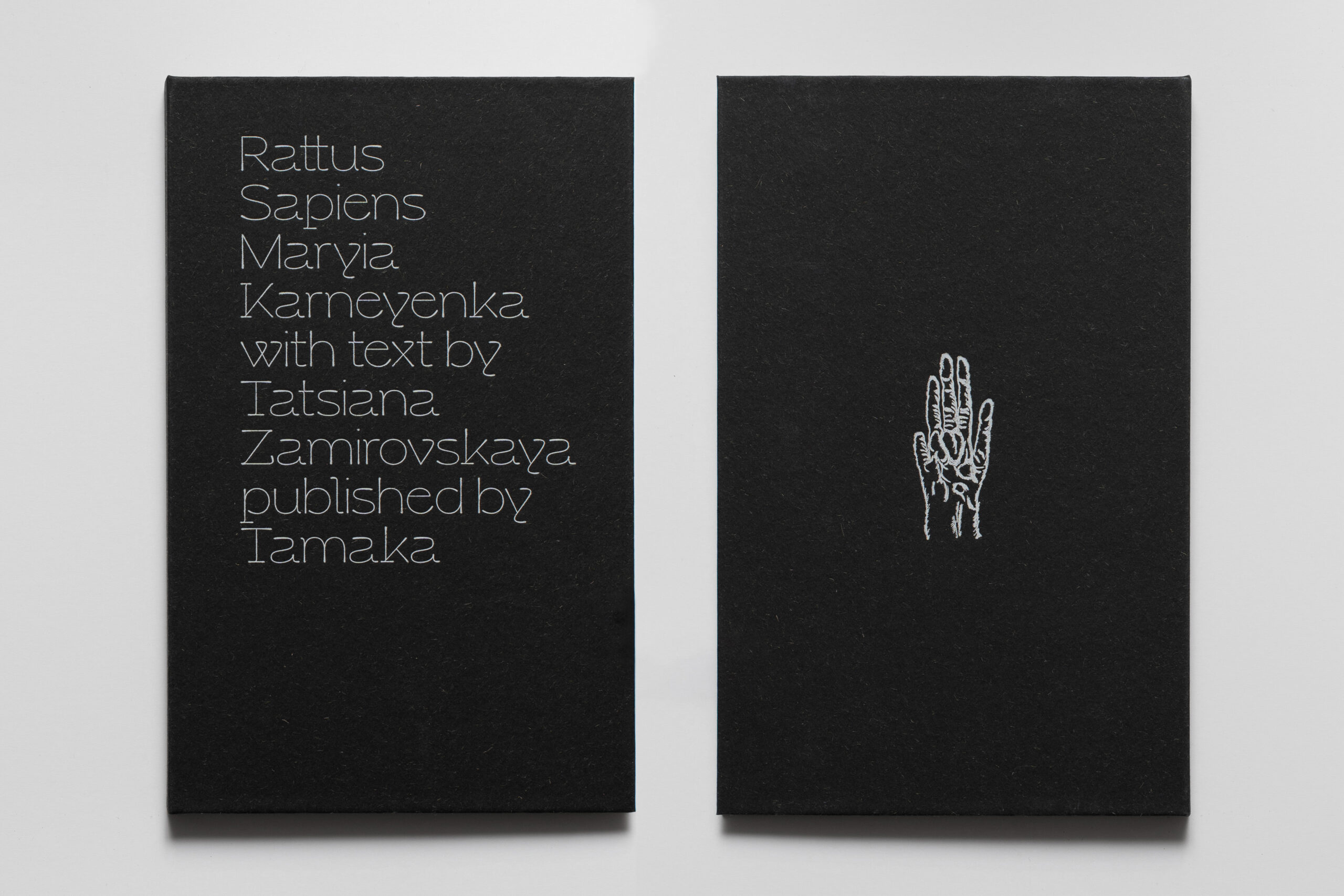
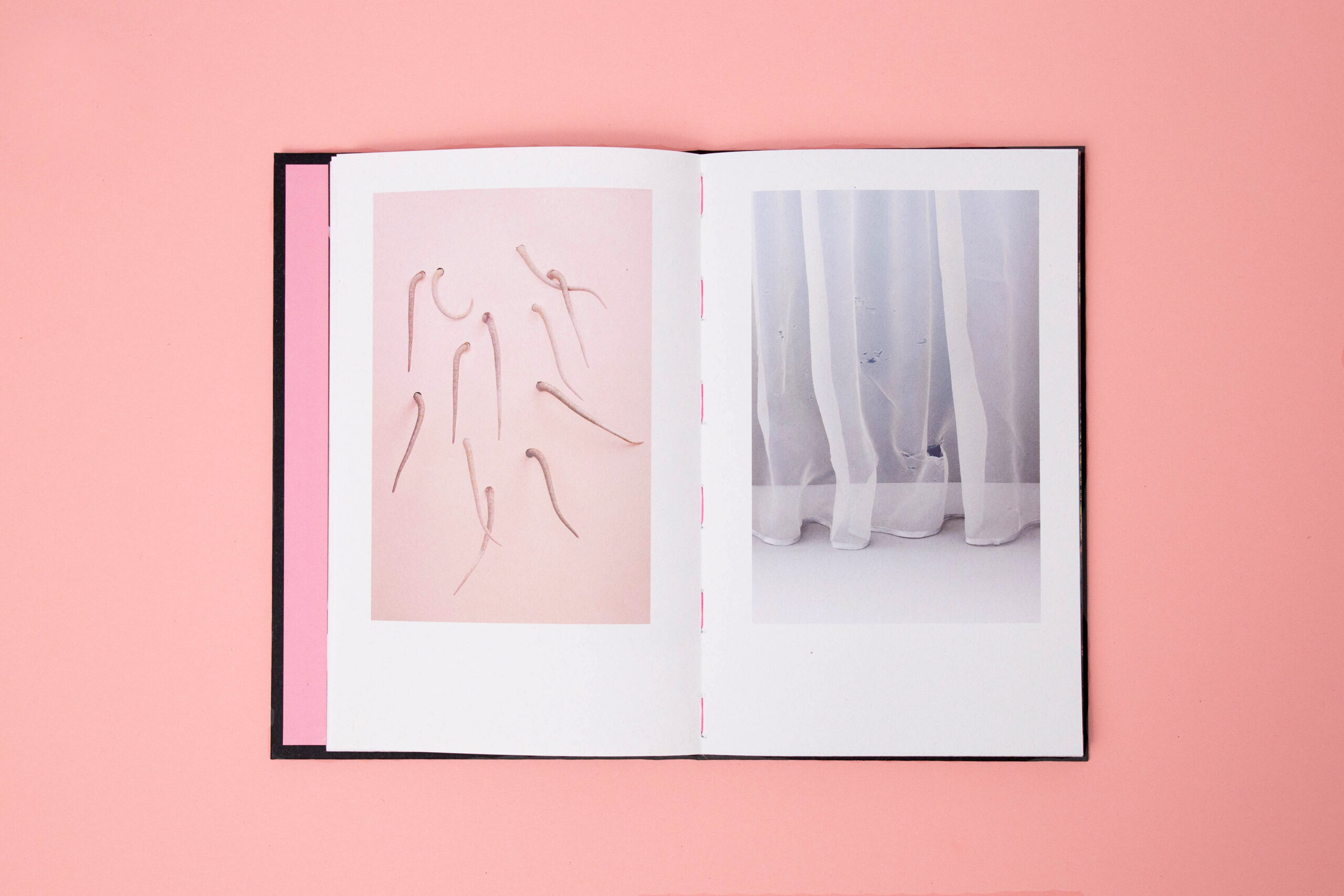
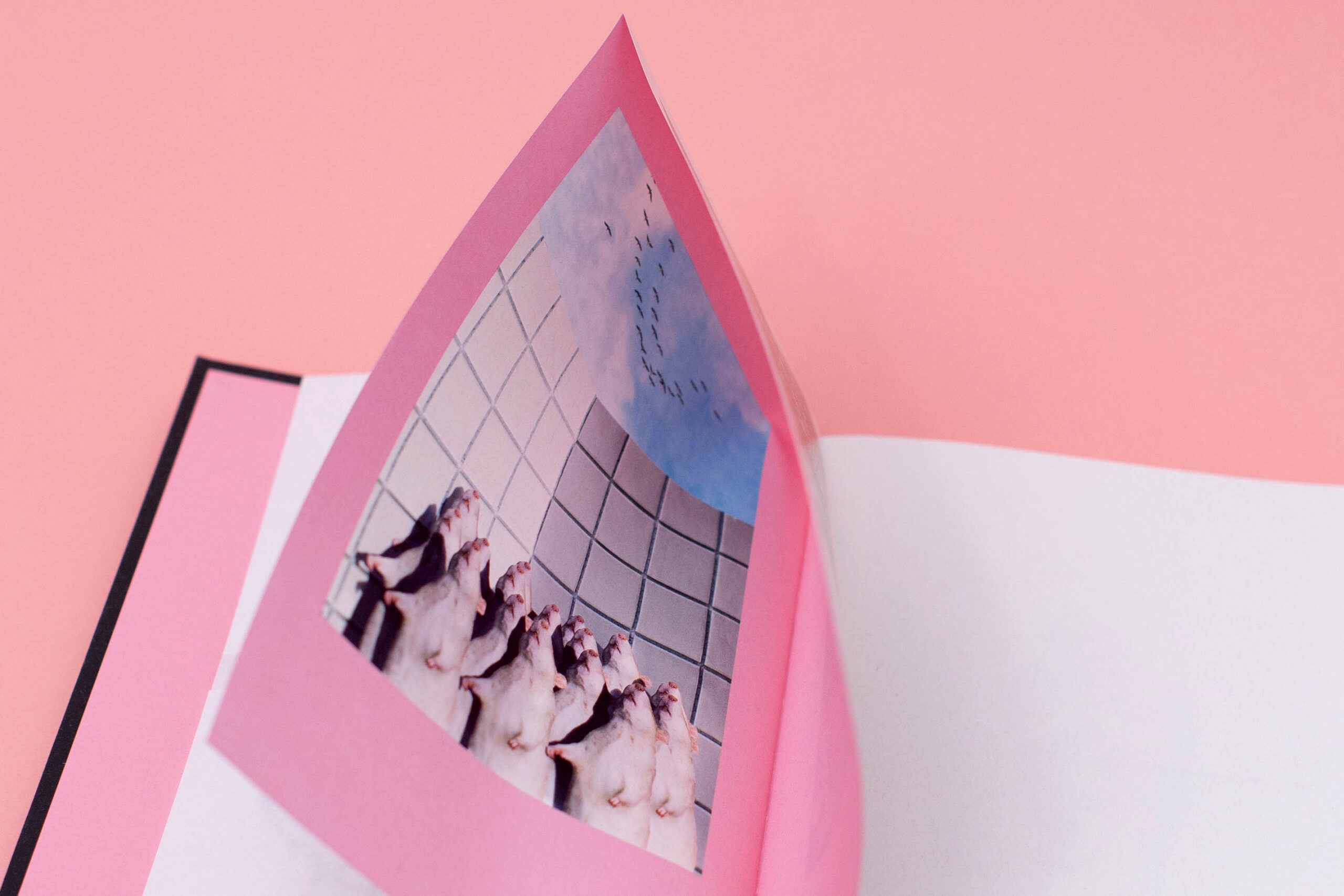
“Rattus Sapience—“the intelligent rat”—is a project by Maryia Karneyenka, whose title instantly evokes associations with modern human civilization. It conveys the core idea of the project: beneath us, above us, or even right beside us, there has always existed and evolved a separate sapient civilization, largely unknown and percepted only through the lens of our fears and myths.
Maryia Karneyenka is a contemporary photographer and artist from Belarus, now based in Warsaw, Poland. The Rattus Sapience project emerged from her activism and personal encounters with rats—relationships that transcend the notion of “ownership,” as they are not defined or limited by possession. For the project, Maryia not only uses her own photographic material but also constructs collages, still lifes, and creates new meanings through appropriation to reveal what lies hidden behind the stigma.
Rattus Sapiens is a multi-layered book—or rather, a multi-tunneled one. A line of visual narration unfolds in the style of a tale, mirrored, two-way, and looped, as we begin and end with the same pair of images—as if the story moves in circles. The cover’s wool-based paper pricks softly against your fingers, like a rat’s fur. The main paper is 100% recycled, with a warm natural shade, tiny specks, and a slightly “whiskered” look. The format of the book is small and elongated—just right to hold close.
The book invites us to look deep into the rat’s hole and abandon—at least temporarily—the position of the species that “won” the evolutionary struggle. It contains elements of play, mockumentary, and stories that may not be real but could happen. This effect is reinforced and amplified by the concluding text — an epilogue-reflection from the rats’ perspective questioning whether humanity ever truly existed or if it is just a myth.
In harmony with the visual voice of the project are the texts by Tatsiana Zamirovskaya, a writer with Belarusian roots based in New York, who not only shares a similar personal experience — Tatsiana calls herself an ambassador for rats — but also brings a post-anthropocentric perspective on the nature of interaction between human and animal civilizations.”
Related
Dialogue: photo + book + sg = ?
Join curators Marvin Tang and Liana Yang for a relaxed afternoon conversation about the role of photobooks in Singapore. Moderated…
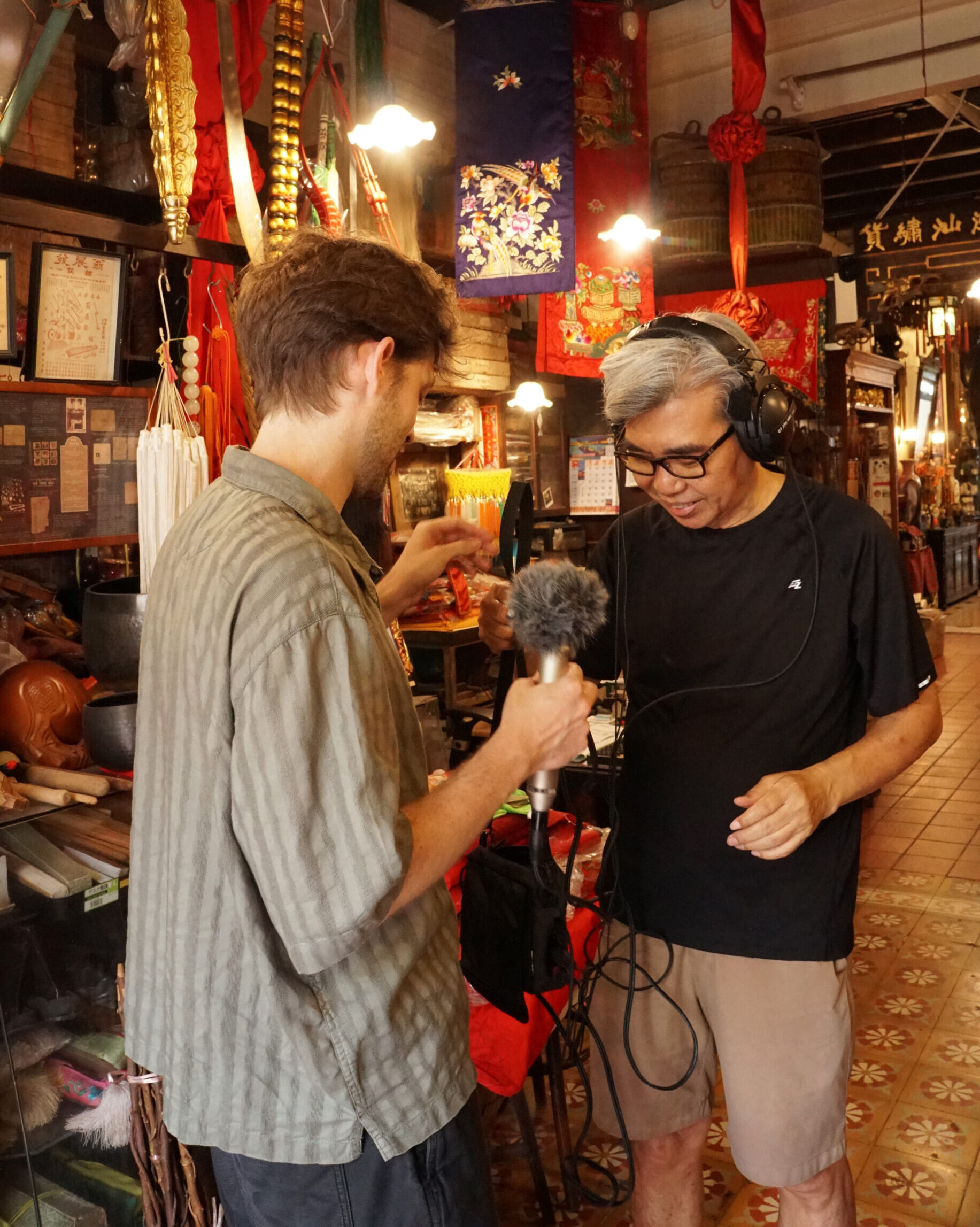
Passing By Paradise: Photo-Audio Walk
Photo-Audio walk along site-specific installations hidden away in Geylang with Dorothy Wong Ka Chung & Benjamin Ryser. Is home to…
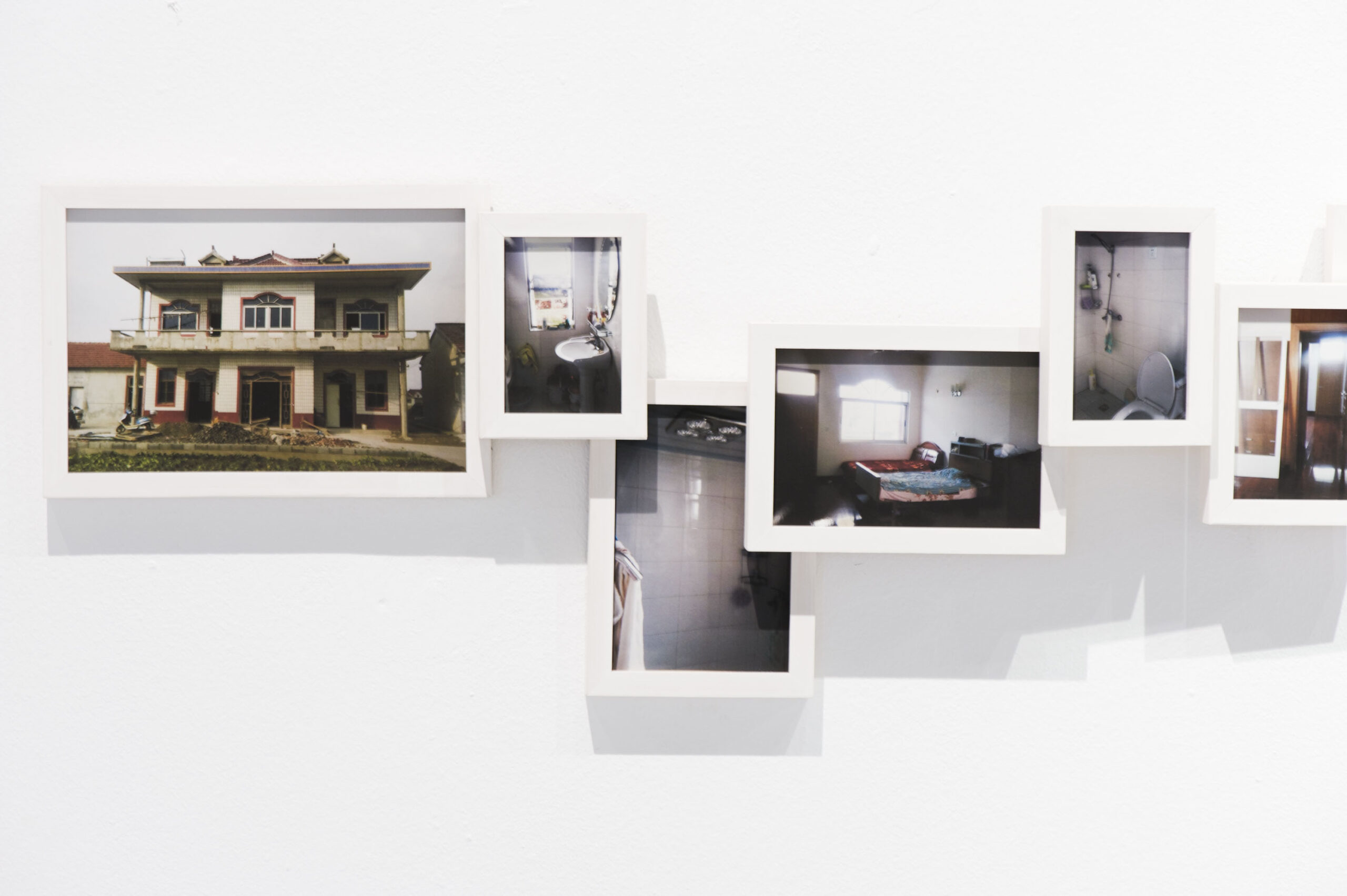
The Stories We Carry: What We Carry Forward
Part of Shifting Images: Photography From Singapore 2000 – 2025 What do we carry with us from one life, generation…