



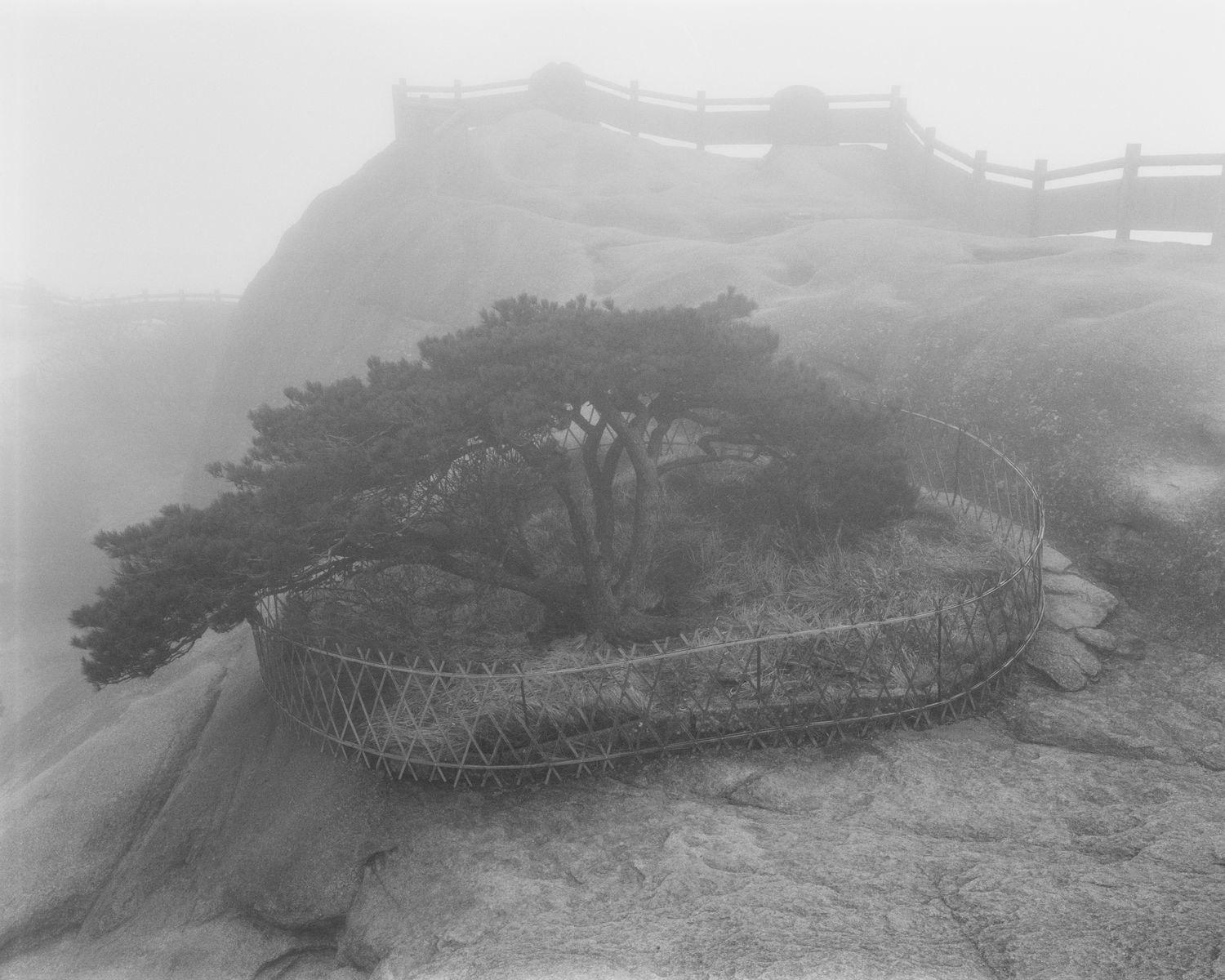
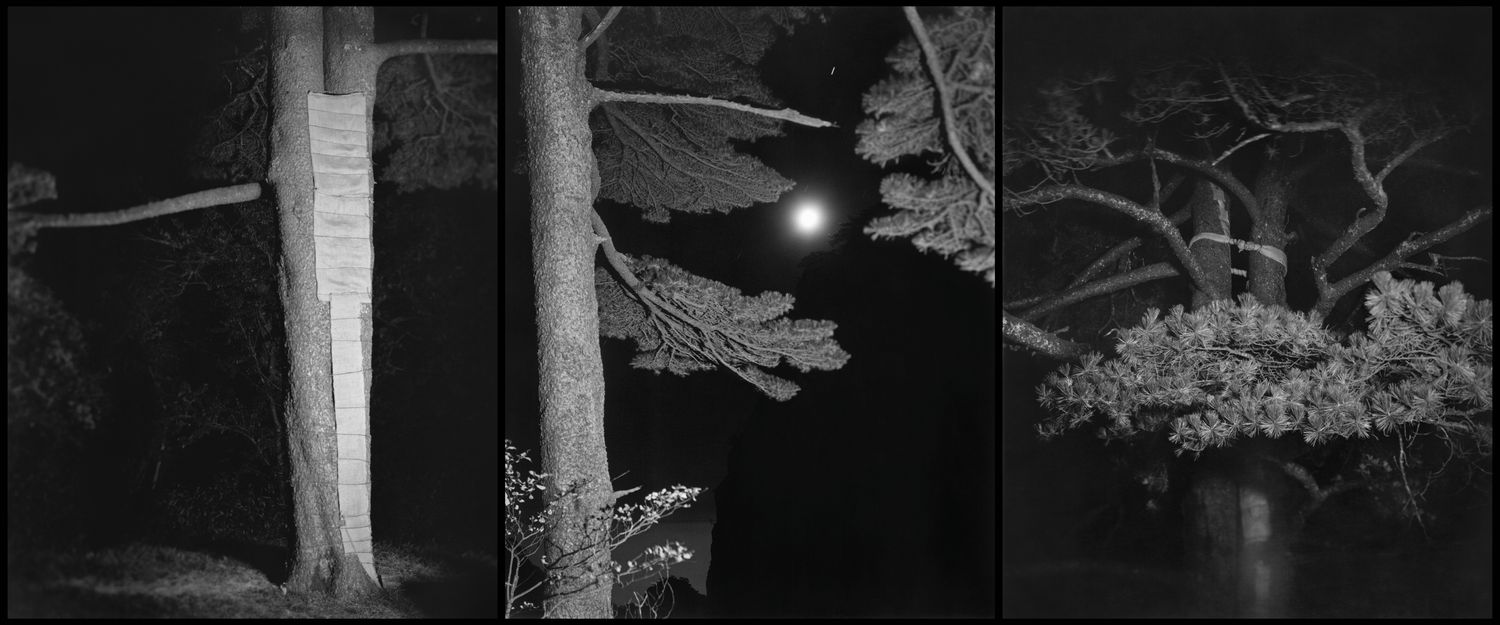
The long-term project How to (Un)Name a Tree investigates the relationship between naming, seeing, and knowledge formation through three closely related and morphologically similar pine species in East Asia: Pinus luchuensis, Pinus taiwanensis, and Pinus hwangshanensis.
During the era of international competition in species discovery, these three pines were successively named by a German botanist upon his return from an expedition to Imperial Japan, a Japanese botanist stationed in colonial Taiwan, and a Chinese botanist of the Republican period. Decades later, their classifications became a subject of dispute during the Cold War, as botanists debated whether they should be regarded as regional variants of a single species or remain distinct. This debate continues today as a botanical misalignment in which the naming of nature remains a legacy of the mapping of power.
The act of naming presumes difference. The act of photographing presumes evidence. Yet when confronted with similar morphologies, both systems of order start to falter. Over the past few years, I travelled to the native habitats of these pines and photographed them, while also locating them across various archives. Working under fog and nightfall, with artificial light and tightly framed compositions, I use the photographic medium’s inherent limitations, its promise of index, to paraphrase another set of indexes: the beings and their names.
Related

Anton Gautama Professional Development Grant
The Anton Gautama Professional Development Grant seeks to play a role in shaping the photography community in Southeast Asia. With…

About Asia Meet 2026: 10th Edition
Asia Meet seeks to facilitate global connection by bridging the gap between photographic practitioners and industry experts across borders. In…

Singaporean Love
Singaporean Love explores Jay Lim’s identity as a gay Singaporean man, tracing his experiences of love, intimacy, and belonging through…