


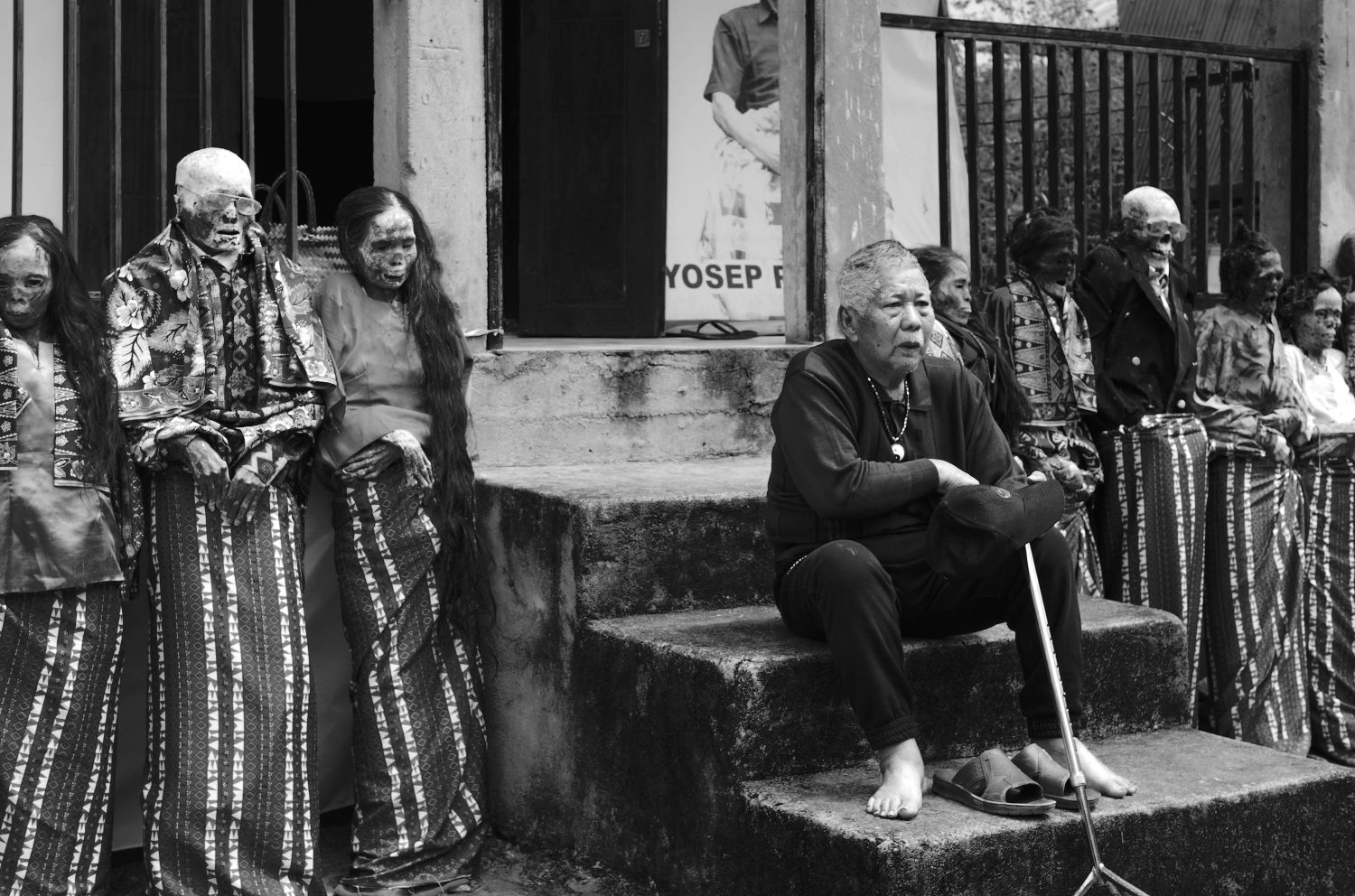
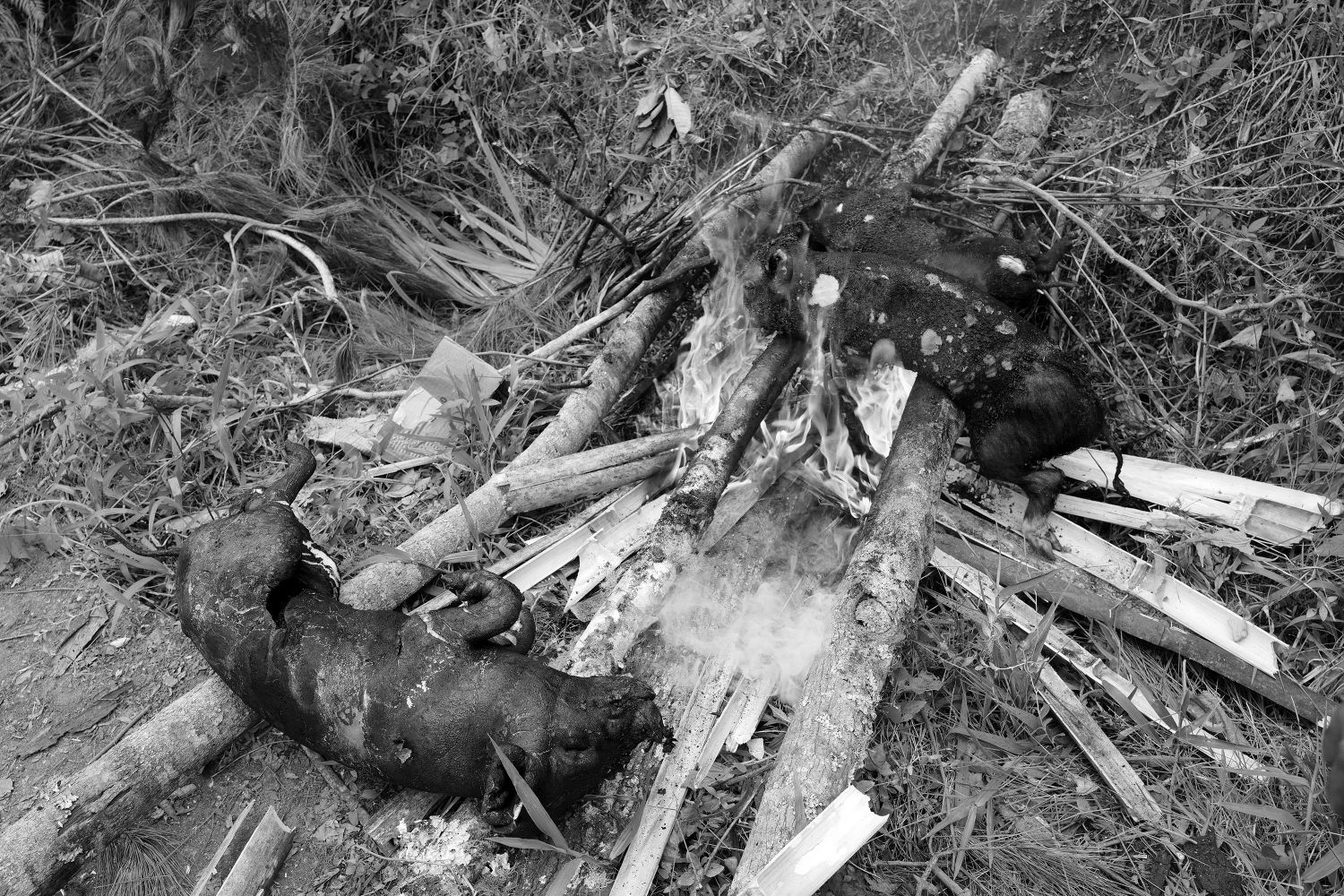
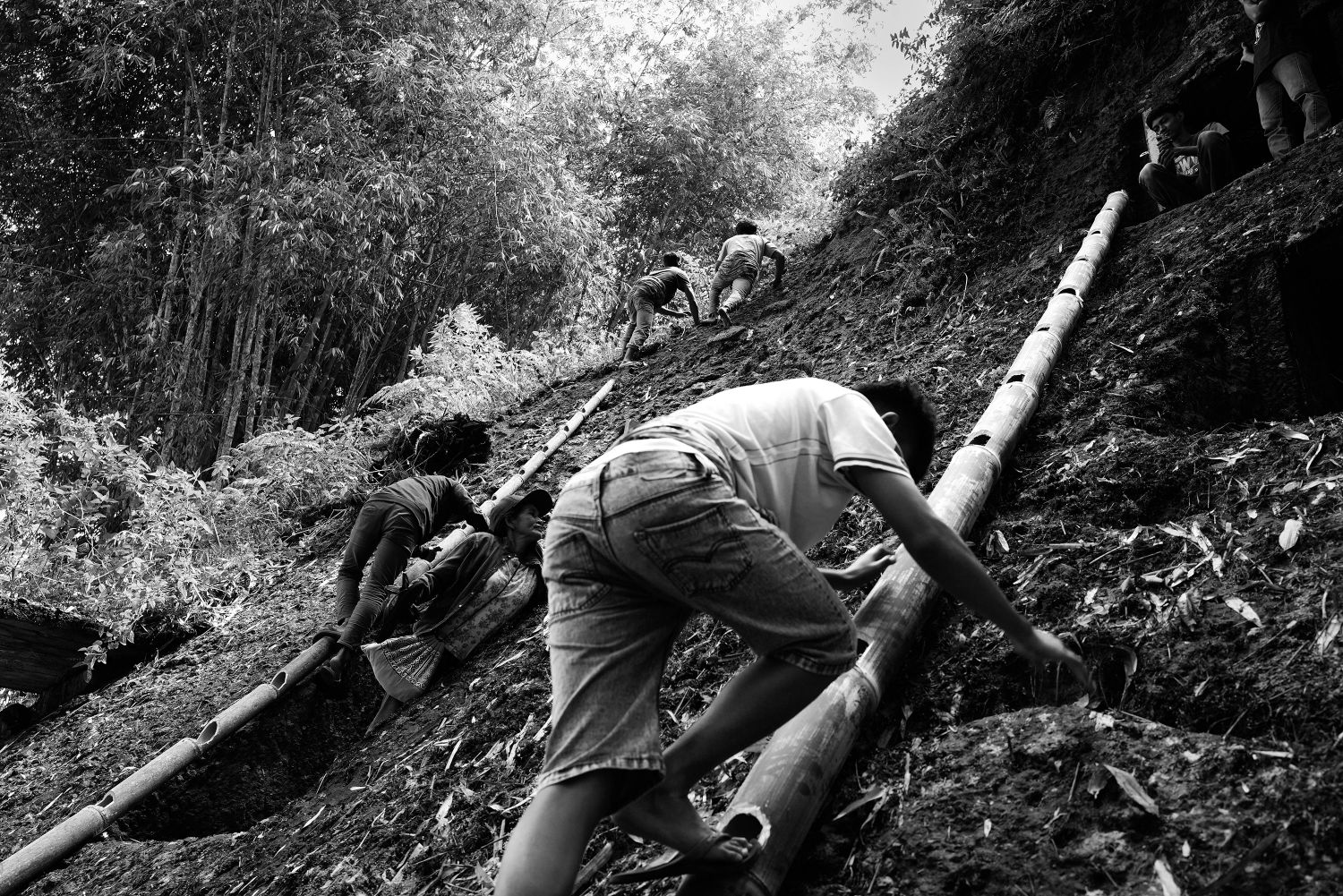
For the Toraja people, death isn’t seen as the end but as a continuation of the bond between the living and those who have passed. In their Manene tradition, reopening the graves of ancestors and caring for their remains isn’t just a mark of respect; it reflects the sophisticated local knowledge surrounding bodies, time, and the environment.
The fact that bodies can remain intact for decades or even centuries isn’t merely a miracle—it’s a result of traditional technology passed down through generations. They use local herbal concoctions with natural antiseptic properties, usually applied right after someone passes away to slow down decomposition. The stone sarcophagi where the deceased are laid to rest aren’t just quiet spaces; they represent ecological architecture that leverages cool temperatures, low humidity, and natural airflow to create ideal conditions for body preservation.
In some cases, families also employ simple embalming techniques they’ve developed independently, based on long-term observations of changes in the human body post-death. All these practices are not just spiritual rituals; they highlight the ecological and biological intelligence of the Toraja people in understanding the relationship between the body and its surrounding nature.
More than just preserving the physical form, this process showcases the Toraja belief in an afterlife. They hold that the souls of the deceased continue their journey into another world, so it’s crucial for their bodies to be treated with respect and care. The Manene ritual fosters a sense of reverence for ancestors and strengthens the bonds among family members and the community. It becomes a time for gathering, reminiscing, and celebrating the lives of those who have departed.
For me, experiencing this has taught me a valuable lesson about how we honor those who came before us and the strong solidarity within a community during times of loss. This tradition emphasizes the richness of our shared cultural heritage and the significance of our roots in shaping who we are—a message that transcends the borders of Toraja culture and resonates with everyone.
Related
Passing By Paradise: Photo-Audio Walk
Photo-Audio walk along site-specific installations hidden away in Geylang with Dorothy Wong Ka Chung & Benjamin Ryser. Is home to…
The Stories We Carry: What We Carry Forward
Part of Shifting Images: Photography From Singapore 2000 – 2025 What do we carry with us from one life, generation…
Shifting Images: Photography From Singapore 2000 – 2025 (The Stories We Carry)
What do photographs remember, and what do we ask them to remember for us? The Stories We Carry explores memory…